
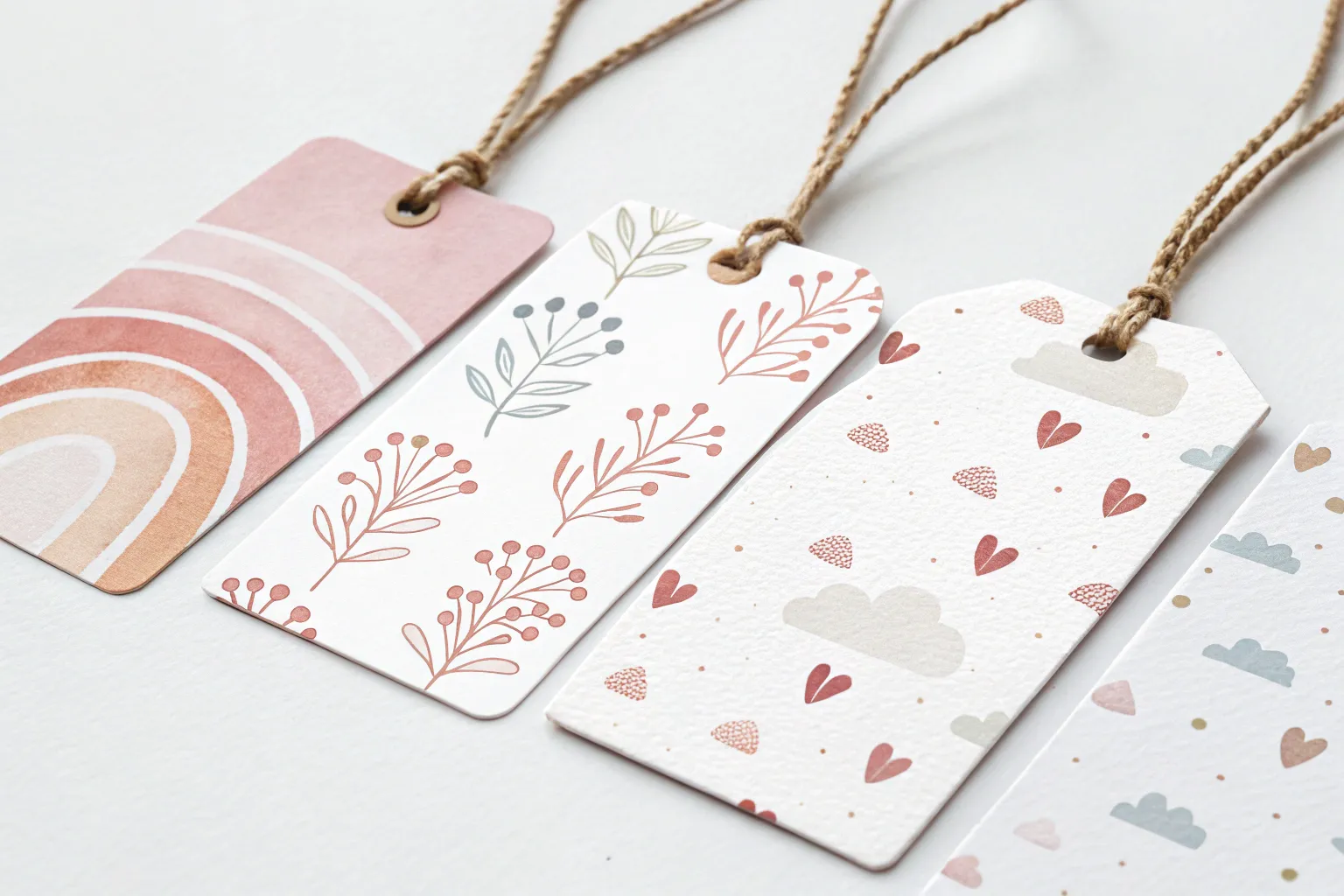
Turning discarded paper bags into watercolor gift tags transforms the ordinary into something worth holding onto. These make every gift feel considered, while doubling as small artworks people actually want to keep.
Why Handmade Gift Tags Matter

A gift tag is often the very first thing a recipient notices. It frames the gift with intention and suggests care before the wrapping is even untied. When you elevate a tag from something disposable to something memorable, the experience of giving becomes more layered.
Unlike gloss-finished store-bought tags, paper bag and watercolor tags carry tactile warmth. Recipients often save them as bookmarks, ornaments, or even wall accents—proof that these little items extend beyond their immediate purpose.
Materials and Tools

Here’s what to gather before starting:
| Material/Tool | Function | Notes |
|---|---|---|
| Paper bags (kraft, grocery, or boutique) | The base surface | Choose uncoated bags—inks or glossy finishes resist watercolor. |
| Watercolor paints | Color foundation | Tubes or pans both work; strong pigments show best on kraft. |
| Brushes | For washes & details | A medium round brush is most versatile. Flat brushes help with geometric patterns. |
| Water + palette | For mixing washes | Use clean water to avoid muddy colors. |
| Scissors, craft knife, ruler | Cutting precision | Keep lines clean; experiment with rounded corners. |
| Hole punch | To string ribbons | Choose a standard size for neatness. |
| Twine, string, ribbon, yarn | Finishing texture | Natural fibers complement kraft; velvet ribbon feels more luxurious. |
| Optional: Metallic accents | Detail work | Gold or copper watercolor brings dimension and holiday sparkle. |
Step-by-Step Instructions
1. Preparing the Paper

- Lay the paper bag flat and cut along seams to maximize usable surface.
- Smooth out creases either by hand or with a warm, dry iron placed beneath a thin cloth.
- Mark shapes: rectangles, circles, or classic tag silhouettes. Tracing cookie cutters or stencils helps.
Tip from practice: When working with thicker grocery bags, aim for smaller tag sizes to avoid curl or stiffness.
2. Applying a Watercolor Base

- Brush a thin layer of clean water onto the surface before painting—this primes the paper fibers.
- Apply loose washes: soft gradients, bold vertical stripes, or subtle abstract patterns.
- Let dry naturally so color blooms stay intact. Heat drying flattens texture but also speeds up work if you’re short on time.
3. Adding Details

- Use a fine brush for silhouettes: trees, stars, fern leaves, or snowflakes.
- Dab small dots for confetti-like textures.
- Outline geometric shapes in pen or darker pigment once the base is dry.
- Letter names or seasonal words with white gel pen or dark marker for contrast.
4. Punching and Tying
- Punch centered holes about ½ inch from the top.
- For simplicity: tie natural twine.
- For refinement: thread velvet ribbon or metallic cord.
- For playful touches: knot in tiny jingle bells, pressed flowers, or reclaimed fabric ribbons.
Design Ideas to Explore
Here are several concept directions you can adapt:
- Rustic Autumn: Burnt umber wash + silhouetted acorns + jute twine.
- Minimalist Winter: White paint dots over warm gray wash, tied with thin cotton cord.
- Festive Metallic: Deep indigo background with gold watercolor splatters, finished with satin ribbon.
- Botanical Freshness: Soft green leaves and watercolor stems, tied with raffia.
- Modern Abstract: Bold color blocks and arrows, cut into geometric tag shapes.
Enhancements for Gift Tags That Last
To ensure the tag becomes more than an accessory:
- Laminate selectively: Brush on a thin matte medium to preserve pigment and resist smudges.
- Layer materials: Glue a vellum sheet or tracing paper overlay with cutouts—revealing watercolor beneath.
- Sew edges: A simple running stitch in embroidery thread frames the design while strengthening it.
- Incorporate mixed media: Attach a dried leaf, small fabric patch, or pressed paper flower.
These details elevate the object into a keepsake, closer to a piece of handmade stationery than disposable wrapping.
Troubleshooting & Tips
| Issue | Cause | Solution |
|---|---|---|
| Paper curls heavily | Too much water absorbed | Pre-stretch paper with tape, or press under weight overnight. |
| Watercolor looks dull | Kraft paper muted pigment | Choose highly pigmented paints or add opaque gouache highlights. |
| Writing isn’t visible | Dark base coat | Use paint pens in white, metallic, or chalk ink. |
| Tags tear at hole punch | Thin kraft or excess pressure | Reinforce with a small paper ring or sticker before threading. |
Storage & Organization
These tags can be made in batches ahead of gifting season:
- Store flat in an envelope or tied stack to prevent bending.
- Organize by theme—holiday, birthday, neutral—to save time.
- Keep a set of blank watercolor bases; personalize names only when needed.
Closing Thought
When we take the time to paint on humble paper and shape it into gift tags, the result is never just a piece of packaging. These tags carry color, touch, and intention. They are small gifts in themselves—evocative enough to be pinned on a corkboard, slipped into a journal, or kept in a memory box long after the main gift is unwrapped.